Discover what we're working on
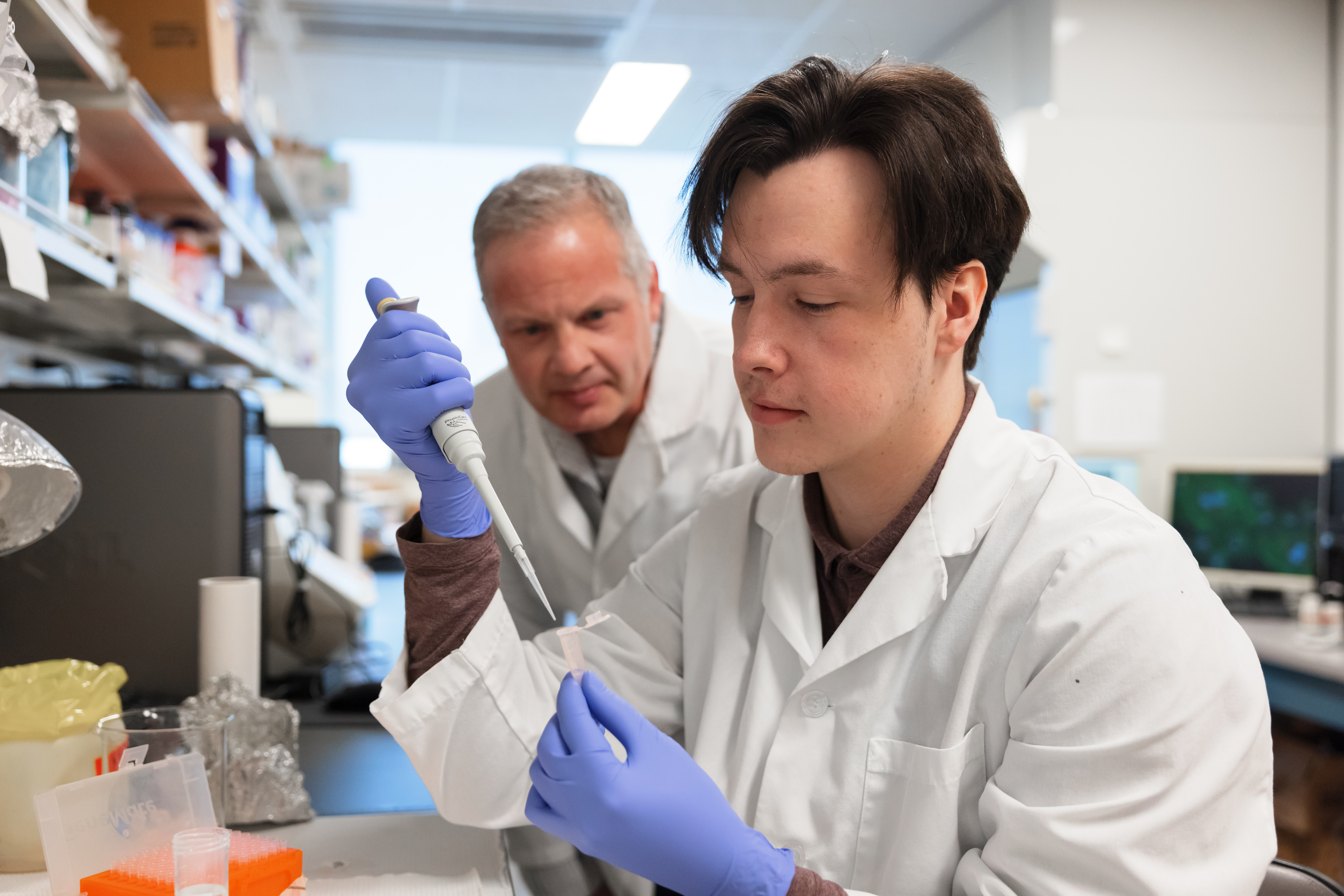
Areas of research focus
The institute addresses health disparities in Indiana by strategically investing resources into four broad areas of research. These areas reflect an emphasis on interdisciplinary collaboration and leverage emerging expertise in informatics and artificial intelligence/machine learning on the IU Indianapolis campus.
Chronic disease prevention and management
Leading externally funded research, H2W faculty experts are advancing scalable interventions for cardiovascular disease, diabetes, obesity, and related chronic conditions. Drawing on health economics and human performance research, the Institute integrates clinical, behavioral, and community-based approaches to reduce health disparities and improve long-term outcomes.
Mental and behavioral health
H2W researchers develop and test evidence-based interventions that address addiction, substance use, trauma, and mental health inequities — grounded in the psychological, social, and environmental determinants that shape individual and community wellbeing. Projects emphasize implementation science, ensuring that discoveries translate into accessible care models in real-world settings.
Community and environmental health
The Institute partners with local and statewide organizations to address the structural and environmental conditions that drive health outcomes. Through policy-relevant research and community-engaged scholarship, H2W faculty are informing public health strategy and working to produce measurable improvements in community health.
Translational and implementation science
Cutting across all research areas, H2W aligns with health systems and public agencies to move discovery rapidly from lab and trial settings into scalable, sustainable practice — improving Hoosier lives and beyond.
Emphasizing collaboration
Interdisciplinary research at the intersections of these broad areas will emphasize approaches that integrate biological, social, economic, and environmental factors to address complex human health challenges.
Examples of research that might fall within the above broad areas of interdisciplinary focus include, but are not necessarily limited to:
- AI-driven platforms for delivery of personalized interventions for physical health, mental health, and addiction recovery
- Machine learning models integrating large health (physical and mental), environmental/social, and physical activity data sets to identify comprehensive risk factors for chronic health conditions such as depression, cardiovascular disease, and obesity
- AI systems forecasting of compounded effects of climate variability on vulnerable populations, enabling early interventions for physical and mental health challenges
- Impact of income, education, employment, and/or health insurance in physical and mental healthcare utilization and outcomes
- The role of social determinants (e.g., housing, employment) in mental and physical health, addiction, and physical performance
- Impacts of environmental stressors (e.g., climate variability) on mental and physical health, addiction, and human performance
- Translational animal models of social and environmental determinants of health (e.g., stress, social dynamics, environmental exposures) that uncover behavioral and physiological mechanisms and inform health interventions and policies
- Digital health platforms to improve physical and mental health and addiction outcomes
- Relationships between built and natural environments and outcomes in mental and physical health, addiction, human performance
- Social factors influencing physical activity, as well as physical and mental health and addiction
- Physical activity as a therapeutic approach for improving mental health and supporting addiction recovery
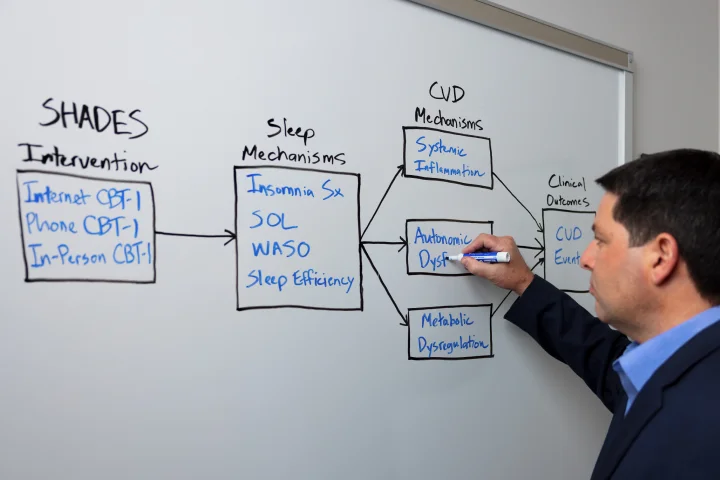
Meet our faculty
The Institute’s core faculty represent nationally competitive investigators with demonstrated excellence in interdisciplinary collaboration and funding
Core faculty are selected based on:
- Sustained external research funding;
- Demonstrated cross-disciplinary collaboration
- Commitment to translational and community-engaged research
- Alignment with the Institute’s strategic priorities.
Collectively, these faculty members form a coordinated research cluster designed to compete for large-scale federal awards and drive transformative outcomes.
The Executive Director for the Institute for Human Health and Wellbeing is Stephen L. Boehm, PhD (IU Indianapolis, School of Science, Department of Psychology).
Our Affiliate Faculty come from a variety of academic backgrounds and a wide range of experience to support interdisciplinary research activity.
Sherri Bucher, PhD (IU Indianapolis, Fairbanks School of Public Health, Department of Community and Global Health)
Melissa Cyders, PhD (IU Indianapolis, School of Science, Department of Psychology)
Cristine Czachowski, PhD (IU Indianapolis, School of Science)
Gabe Filippelli, PhD (IU Indianapolis, School of Science, Department of Earth and Environmental Science)
Sumedha Gupta, PhD (IU Indianapolis, School of Liberal Arts, Department of Economics)
Dan Johnson, PhD (IU Indianapolis, School of Liberal Arts, Department of Geography)
Gail Kerver, PhD (IU Indianapolis, School of Science, Department of Psychology)
Drew Kesner, PhD (IU Indianapolis, School of Science, Department of Psychology)
Saptarshi Purkayastha, PhD (IU Indianapolis, Luddy School of Informatics, Computing, and Engineering, Department of Biomedical Engineering and Informatics)
Jesse Stewart, PhD (IU Indianapolis, School of Science, Department of Psychology)
Contact
Executive Director
IU Institute for Human Health and Wellbeing
420 University Blvd
Indianapolis,
IN
46202
USA